
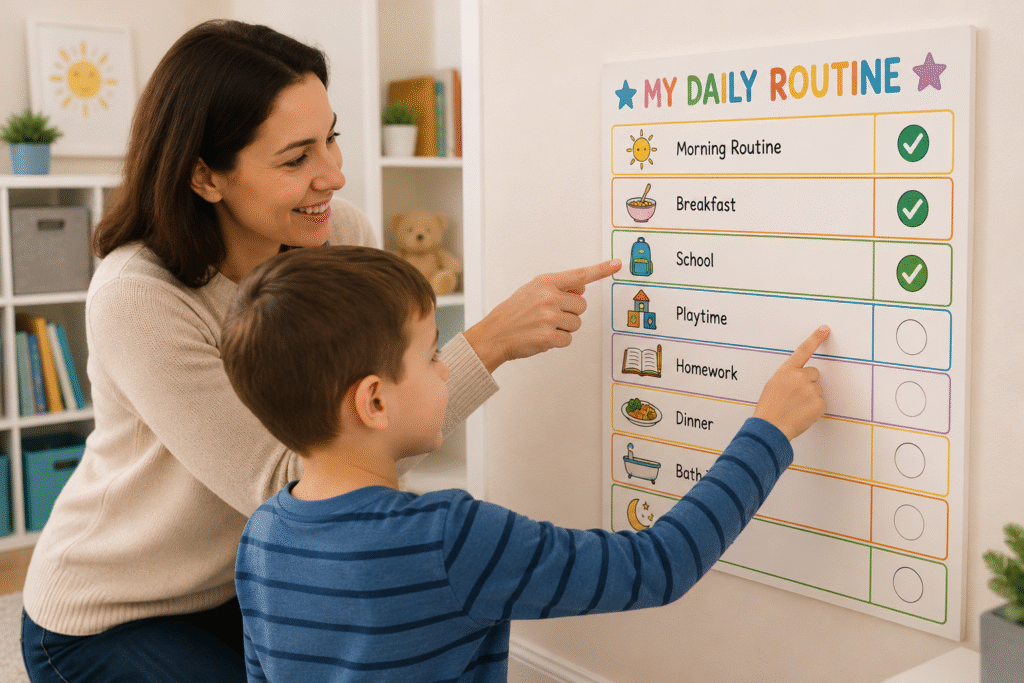
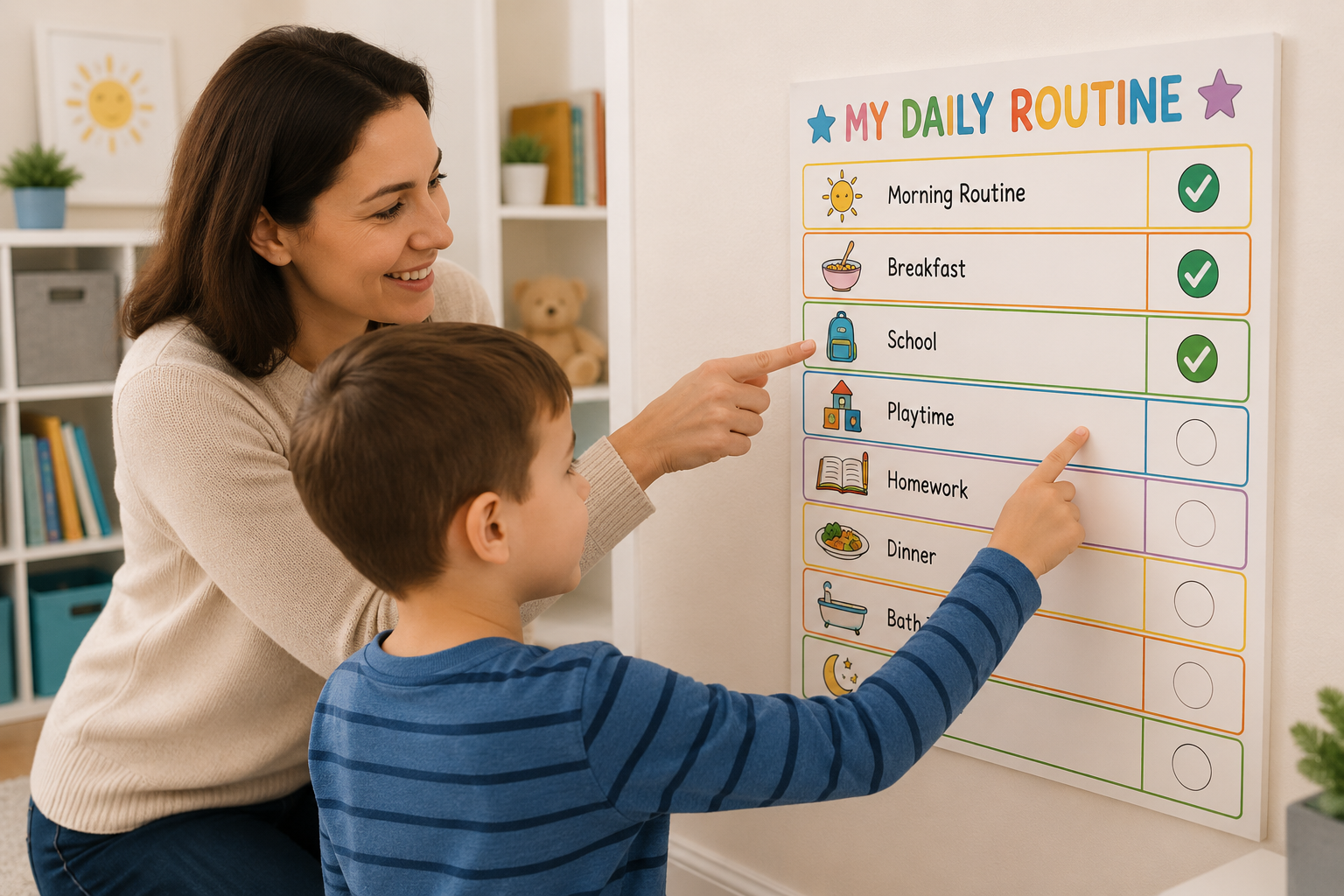
Every child benefits from having a sense of what to expect throughout the day.
Whether it’s a morning routine before school, a familiar bedtime schedule, or knowing what comes next during daily activities, structure can help create a greater sense of comfort and stability for children as they navigate everyday life.
While every child is unique, predictable routines often provide a foundation that helps families move through the day with more confidence and less stress.
Why structure matters
Children are constantly learning, adapting, and processing new experiences.
When daily routines are consistent, children often spend less energy trying to figure out what is happening next and more energy focusing on learning, participating, and engaging with the world around them.
Structure does not mean every moment of the day needs to be planned. Instead, it means creating a general framework that helps make daily life feel more familiar and manageable.
Examples of structure may include:
- Consistent morning routines
- Regular meal times
- Predictable after-school schedules
- Established bedtime routines
- Clear expectations for daily activities
These routines can help create a sense of stability, even when other parts of life feel busy or unpredictable.
The role of predictability
Predictability helps children understand what to expect from their environment.
When transitions and daily activities follow familiar patterns, children often feel more prepared for what comes next. This can help create smoother experiences throughout the day for both children and their families.
Simple examples might include:
- Preparing children for upcoming activities
- Following familiar daily schedules
- Using consistent communication
- Maintaining routines whenever possible
Small moments of predictability can often make a meaningful difference in helping children feel more comfortable and confident.
Structure supports the whole family
The benefits of routine are not limited to children.
Families often find that consistent schedules help reduce daily stress, improve organization, and create a greater sense of balance at home.
When everyone understands what the day generally looks like, daily responsibilities can feel more manageable and communication may become easier.
Structure is not about perfection. It is about creating systems that support the needs of the household while remaining flexible enough for real life.
Building routines that work
Every family is different, which means there is no single routine that works for everyone.
The most effective routines are often the ones that feel realistic and sustainable. Small, consistent habits are usually easier to maintain than complicated schedules that create additional pressure.
Parents and caregivers can start by focusing on one or two areas of the day where greater consistency may be helpful and gradually build from there.
Over time, these small routines can contribute to a stronger sense of predictability and stability within the home.
Creating supportive environments for children
Structure and predictability are not about rigid schedules. They are about creating an environment where children know what to expect and feel supported as they move through daily life.
At AWC Behavioral Health, we understand the value of personalized support that works within each family’s unique routines and circumstances. Our goal is to help create supportive environments that encourage consistency, confidence, and meaningful everyday progress.
If you’re looking for behavioral support services that are tailored to your child’s needs and your family’s daily life, connect with AWC Behavioral Health to schedule a free assessment at (561) 931-3837 or info@awcbehavioralhealth.com. You can also visit us at 370 Camino Gardens Blvd Ste 201B, Boca Raton, FL 33432.