
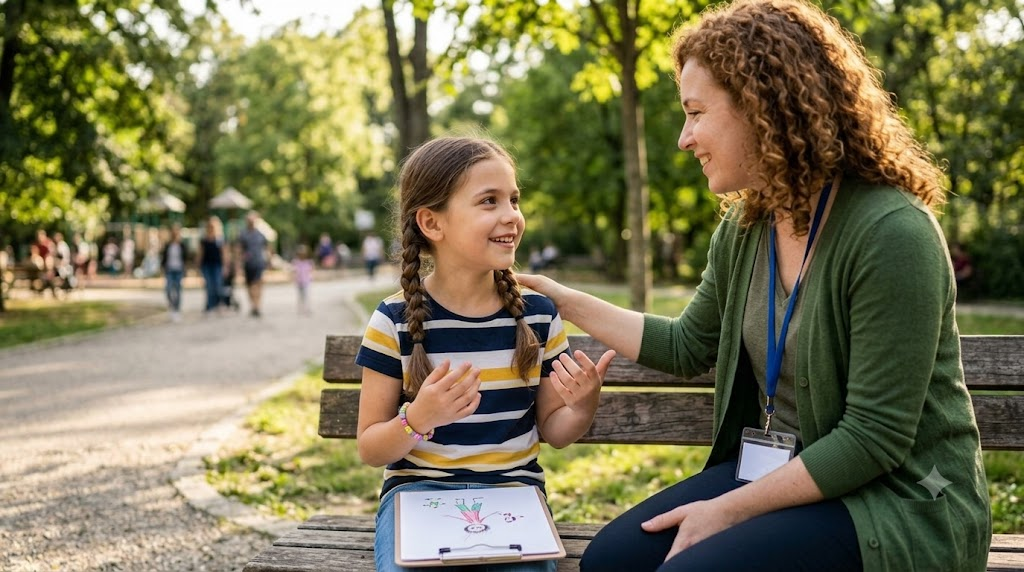
Therapy sessions are an important opportunity for children to learn and practice new skills. However, much of a child’s day takes place outside of those sessions—at home, at school, in the community, and during everyday family activities.
Because learning happens throughout the day, many children benefit from consistent support across the environments where they spend the most time.
This doesn’t mean therapy should continue all day. Instead, it means that the skills children practice during therapy can be reinforced during everyday experiences in ways that feel natural and meaningful.
Learning doesn’t stop when therapy ends
Children learn through repetition, practice, and everyday experiences.
A skill introduced during therapy often becomes more meaningful when children have opportunities to use it in real-life situations.
For example, everyday moments such as getting ready for school, helping with simple household tasks, participating in family activities, or interacting with others can become opportunities to practice skills in a familiar setting.
These experiences help connect learning to daily life.
Consistency helps children apply new skills
Children often benefit when the people in their lives work toward shared goals.
When parents, caregivers, and therapy professionals communicate regularly, children receive more consistent support across different environments.
This consistency may include:
- Using similar routines at home
- Encouraging skills during everyday activities
- Providing clear and consistent expectations
- Celebrating progress together
- Sharing observations between families and providers
Working together helps create a more supportive learning environment.
Everyday routines create meaningful opportunities
Children don’t always need structured activities to continue learning.
Many valuable opportunities happen during ordinary moments throughout the day.
These might include:
- Following a morning routine
- Cleaning up after playtime
- Participating in family meals
- Taking turns during games
- Completing simple responsibilities
- Practicing communication during conversations
These familiar experiences allow children to build confidence while using skills in real-life situations.
Families are an important part of the learning process
Parents and caregivers know their children best.
By sharing observations, asking questions, and participating in the learning process, families help create continuity between therapy sessions and everyday life.
Even small moments of encouragement and positive reinforcement throughout the day can support continued growth over time.
Progress happens beyond scheduled sessions
Meaningful progress isn’t limited to what happens during therapy appointments.
It can also be seen when children begin applying skills more naturally throughout their daily routines, whether at home, in school, or within their community.
These everyday moments often become some of the most meaningful indicators of continued learning.
Supporting children where life happens
Children spend most of their time outside of a therapy room.
That’s why meaningful support extends beyond scheduled appointments and into the everyday experiences that shape learning, confidence, and independence.
At AWC Behavioral Health, we believe therapy is most effective when it connects with a child’s daily life. By partnering with families and creating individualized support plans, we help children practice meaningful skills in the environments where they naturally learn, grow, and participate every day.
If you’re interested in learning more about our behavioral support and ABA therapy services, connect with AWC Behavioral Health to schedule a free assessment at (561) 931-3837 or info@awcbehavioralhealth.com. You can also visit us at 370 Camino Gardens Blvd Ste 201B, Boca Raton, FL 33432.