
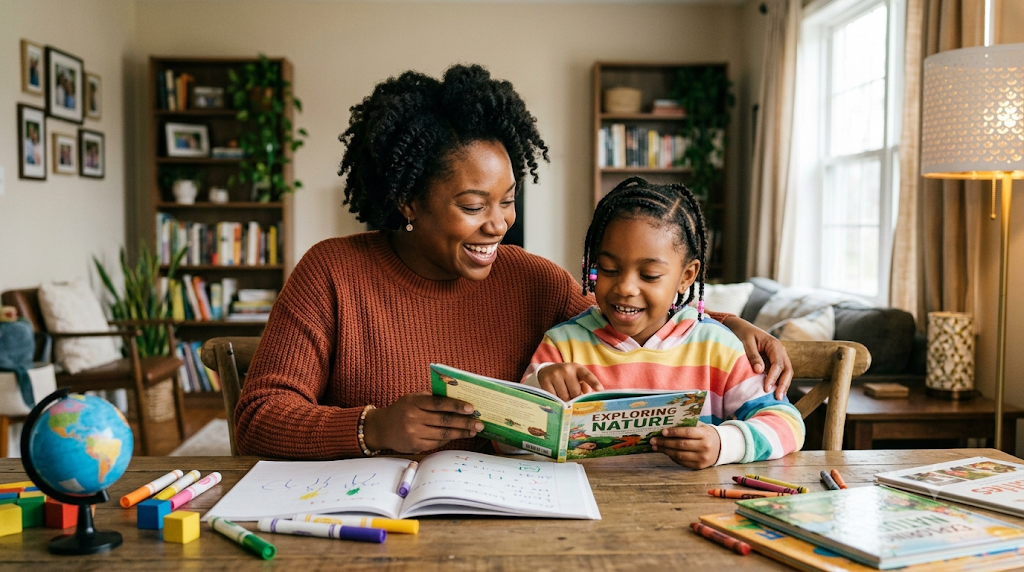
Learning does not only happen during school hours.
While classrooms provide important opportunities for children to gain knowledge and practice new skills, many everyday moments at home can also support learning, confidence, and independence.
Parents and caregivers play an important role by creating environments where children can explore, ask questions, practice skills, and connect learning to real-life experiences.
Supporting learning at home does not require complicated activities or a strict schedule. Often, the most meaningful opportunities happen through simple daily routines.
Turn everyday activities into learning opportunities
Many common activities provide natural opportunities for children to practice important skills.
For example:
- Cooking together can encourage measuring, following directions, and problem-solving
- Grocery shopping can support decision-making and communication
- Reading together can build vocabulary and encourage conversations
- Household responsibilities can encourage independence and participation
Learning can happen anywhere when children are given opportunities to engage and participate.
Encourage curiosity through conversations
Children learn by asking questions and exploring the world around them.
Taking time to have conversations throughout the day can help children develop communication skills and think through new ideas.
Simple questions can encourage children to share their thoughts:
- “What was your favorite part of today?”
- “What do you think will happen next?”
- “How did you figure that out?”
These everyday conversations help children feel heard while encouraging curiosity and critical thinking.
Create routines that support learning
Consistent routines can help children understand expectations and feel prepared for daily activities.
Simple routines such as:
- Setting aside time for reading
- Creating a regular homework space
- Preparing for the next day together
- Including children in household activities
can help create a supportive environment for learning outside the classroom.
The goal is not perfection. It is creating habits that fit naturally into family life.
Celebrate effort and progress
Children build confidence when their efforts are recognized.
Instead of focusing only on the final result, parents can acknowledge the process:
- Trying something new
- Continuing after a challenge
- Practicing a skill
- Asking for help when needed
Recognizing these moments can encourage children to keep learning and growing.
Support independence through small responsibilities
Everyday responsibilities can provide children with opportunities to practice independence.
Depending on their age and abilities, children can participate in tasks such as:
- Organizing their belongings
- Preparing simple snacks
- Choosing between options
- Helping with family routines
Small responsibilities can help children feel capable and involved in their daily lives.
Learning looks different for every child
Every child has their own interests, strengths, and ways of learning.
The most effective support often comes from understanding what motivates each child and creating opportunities that connect with their everyday experiences.
Learning beyond the classroom is not about adding more pressure to a family’s schedule. It is about finding simple ways to encourage growth through connection, consistency, and everyday moments.
Supporting children’s growth every day
At AWC Behavioral Health, we believe that children benefit from supportive environments where they can practice skills, build confidence, and participate in everyday experiences.
By partnering with families, we create personalized support approaches that recognize each child’s unique needs and help families encourage meaningful progress at home, in school, and in the community.
If you’re looking for behavioral support services tailored to your child’s unique needs, connect with AWC Behavioral Health to schedule a free assessment at (561) 931-3837 or info@awcbehavioralhealth.com. You can also visit us at 370 Camino Gardens Blvd Ste 201B, Boca Raton, FL 33432.