
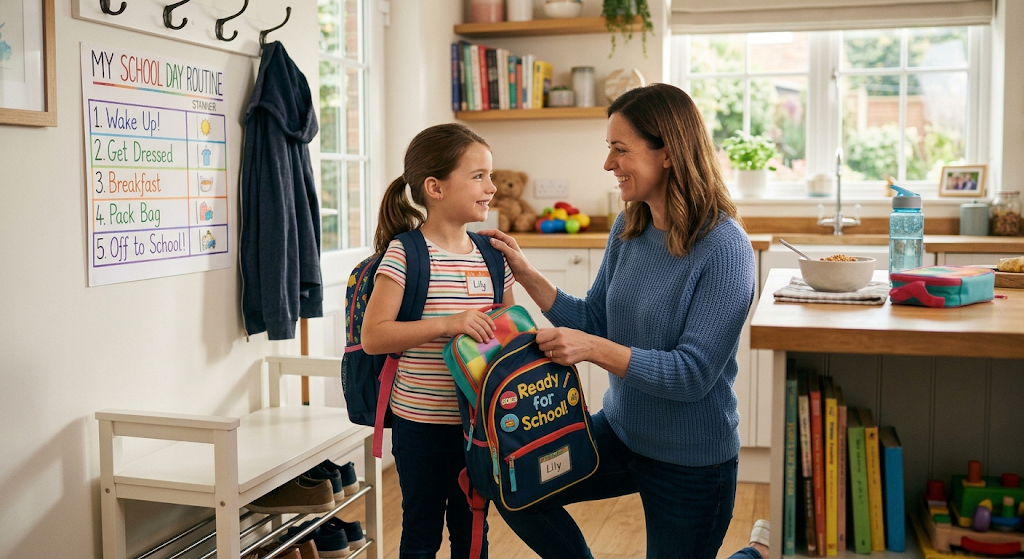
A new school year brings many changes for children. New classrooms, different schedules, new teachers, and updated expectations can make the transition feel exciting while also requiring time to adjust.
For many families, creating a smooth transition starts at home. Simple routines, open communication, and consistent support can help children feel more prepared as they adapt to a new school routine.
Adjusting does not happen overnight. Each child experiences change differently, and providing patience and encouragement can help make the process feel more manageable.
Why school routine changes can feel challenging
Children often rely on familiar patterns throughout their day.
During the school year, routines help children understand what comes next, from getting ready in the morning to completing homework after school. When those patterns change, children may need time to become comfortable with the new schedule.
Changes may include:
- A different classroom environment
- New teachers or classmates
- Adjusted school schedules
- New responsibilities
- Different after-school routines
Preparing children for these changes can help create a stronger sense of familiarity.
Rebuild routines before the school day begins
A consistent routine at home can help children feel more prepared for school.
Families can begin by practicing simple habits such as:
- Returning to a regular bedtime schedule
- Creating a predictable morning routine
- Preparing school items the night before
- Setting aside time for homework or quiet activities
- Establishing an after-school routine
These small steps can help children know what to expect each day.
Talk about the new school routine
Communication plays an important role during times of change.
Talking with children about their new routine gives them an opportunity to ask questions, share thoughts, and feel involved in the transition.
Parents can encourage conversations by asking questions like:
- “What are you looking forward to this school year?”
- “What part of your new routine feels exciting?”
- “Is there anything you want to learn more about?”
Listening and acknowledging their feelings can help children feel supported.
Create consistency between home and school
Children spend time learning in different environments, and consistency can help connect those experiences.
Parents, caregivers, and teachers can support children by sharing helpful information, maintaining clear expectations, and encouraging similar routines when possible.
A collaborative approach can help children feel supported as they navigate new experiences.
Support independence with everyday tasks
A new school routine often comes with new responsibilities.
Parents can help children build confidence by giving them opportunities to practice age-appropriate tasks, such as:
- Organizing their backpack
- Choosing clothes for the next day
- Preparing simple items for school
- Following morning routines
- Managing personal belongings
Small responsibilities can help children feel more capable and prepared.
Be patient during the adjustment period
Every child adapts to change at their own pace.
Some parts of a new routine may feel easy, while others may require more practice and encouragement. Celebrating small steps can help children recognize their progress and build confidence over time.
The goal is not to create a perfect routine. It is to create a supportive environment where children feel comfortable learning and adjusting.
Supporting children through everyday transitions
New routines are a normal part of childhood. With preparation, consistency, and encouragement, families can help children approach changes with greater confidence.
At AWC Behavioral Health, we believe personalized support begins with understanding each child’s unique needs, strengths, and everyday experiences. Our team works alongside families to create supportive approaches that connect with real-life routines at home, school, and in the community.
If you’re looking for behavioral support services tailored to your child’s needs, connect with AWC Behavioral Health to schedule a free assessment at (561) 931-3837 or info@awcbehavioralhealth.com. You can also visit us at 370 Camino Gardens Blvd Ste 201B, Boca Raton, FL 33432.