


Communication Skills
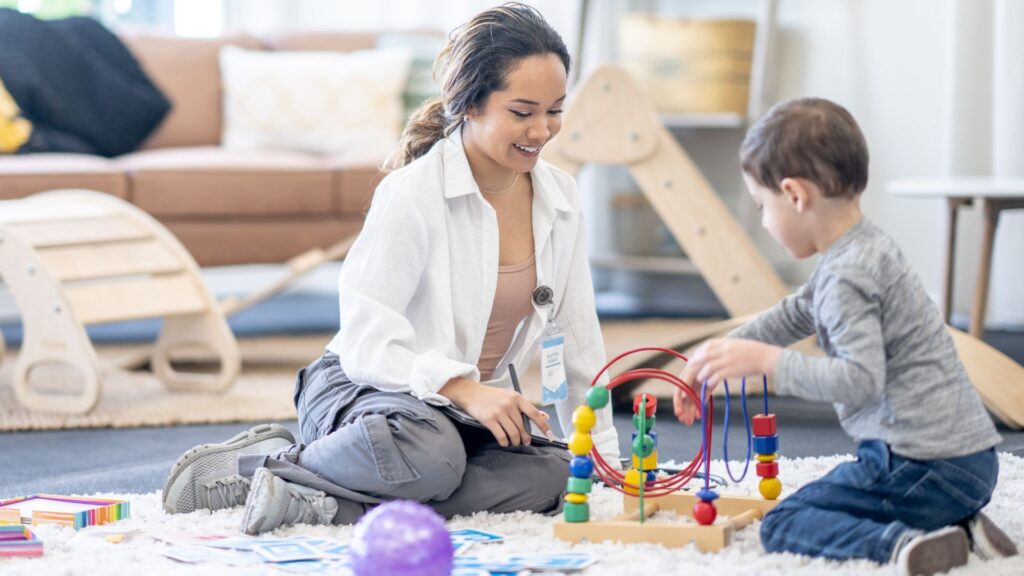
Communication is one of the most essential areas of development. Our programs focus on helping children express their needs, understand spoken language, and build stronger interactions with others. We teach communication in ways that match each child’s abilities, which may include verbal language, gestures, picture-based systems, or assistive communication devices. Over time, improved communication reduces frustration, increases independence, and strengthens social relationships. By using ABA skill-building methods, we reinforce every step of communication development to create lasting progress.

Daily Living Skills
Daily living skills are critical for functional independence. We teach children the skills needed for routines such as dressing, brushing teeth, eating, cleaning up, toileting, handwashing, following directions, and transitioning between activities. Our developmental skill training approach includes clear instruction, visual supports, step-by-step guidance, and positive reinforcement that help children learn at their own pace. These foundational skills make a significant difference in a child’s ability to participate in daily life and build overall confidence.
Play and Social Skills
Play is an important part of learning and development, especially for building peer relationships and social understanding. Our skill acquisition programs include structured play instruction that helps children learn turn-taking, sharing, imaginative play, cooperative activities, and appropriate social behavior. We focus on building social communication skills such as greeting peers, recognizing emotions, asking for help, and engaging in back-and-forth interaction. These skills are essential for long-term emotional well-being and successful involvement in school and community environments.
Learning Readiness Skills
Learning readiness skills prepare children for academic environments and structured teaching. We focus on abilities such as attending to tasks, following instructions, staying seated, completing work with guidance, participating in group learning, and developing early academic concepts. These foundational skills make it easier for children to succeed in school and other learning settings. By strengthening readiness for learning, we help create a smoother transition into educational programs and support long-term academic growth.

Assessment and Goal Setting
We begin with a comprehensive assessment completed by experienced clinicians. This assessment evaluates current skills across communication, social behavior, daily living, and learning readiness. Based on the results, we identify strengths, challenges, and immediate goals. Each goal is chosen to support functional improvement that will have a positive impact on the child’s everyday life. This structured goal setting ensures that progress is purposeful and connected to real-world needs.
Tailored Teaching Strategies
Our team uses ABA skill-building techniques that adapt to the child’s individual learning style. This may include discrete trial teaching, natural environment teaching, task analysis, visual schedules, prompting systems, and reinforcement plans. We also work with families to ensure strategies can be replicated at home for consistent learning. Because each plan is flexible, we adjust our teaching methods as the child grows and develops new capabilities.

Family Collaboration
Parent involvement is an important part of skill acquisition for special needs children. We provide clear guidance and training, so families understand how to reinforce skills outside of therapy sessions. When children receive consistent support at home, they make faster and more stable progress. We encourage open communication with families and value their input in shaping goals and strategies. Collaboration ensures that the child’s program reflects their real-life needs and helps parents feel confident in supporting their child’s development.
Data Collection and Analysis
During each session, our clinicians collect detailed data on the child’s performance, including accuracy, independence, and consistency. This information helps us determine whether the teaching methods are effective or need adjustment. By analyzing data regularly, we make informed decisions that keep the child on a steady path toward improvement.
Regular Team Reviews
Our team meets regularly to review progress, evaluate goals, and identify opportunities for new skill development. These reviews ensure that every child’s program remains relevant and aligned with their evolving needs. We update goals as children master current skills and are ready to learn new ones.
Family Updates and Feedback
We believe that families should always be informed about their child’s progress. We provide regular updates, progress reports, and opportunities for discussion so parents understand how their child is performing and how they can continue supporting learning at home. Transparent communication helps families feel empowered and involved in the process.
Celebrating Achievements
Skill acquisition is a gradual process, and each step forward is worth celebrating. We take time to acknowledge progress, both big and small, because these moments encourage motivation and reinforce a positive learning environment. Celebrating success helps children feel proud and encourages them to keep working toward their goals.